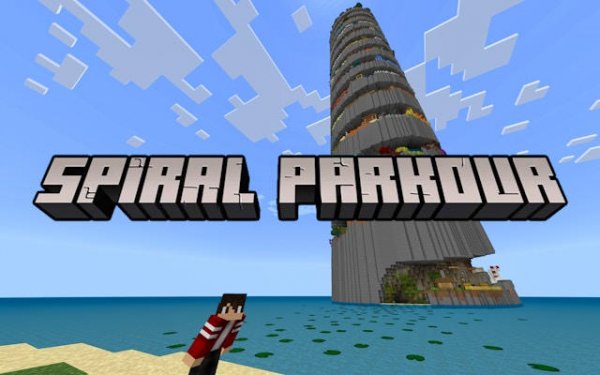
Vertical Ascent Runner succeeds by keeping its scope focused. The spiral tower design creates natural progression, and the five biomes offer enough visual variety to sustain interest. The physics feel responsive, making each successful jump satisfying. Hidden paths add replay value without feeling mandatory. The lack of combat or complex systems means the game never strays from its core climbing loop. It is a solid choice for anyone looking for a clean, family-friendly platformer that rewards patience and observation.
At the heart of Vertical Ascent Runner is a movement system that emphasizes momentum and timing. Players control a character who runs along spiral pathways that wrap around massive central towers. The physics engine governs every leap, landing, and turn, meaning each action has weight and consequence. Jumps require careful aim, especially when platforms are moving or spaced far apart. The game rewards players who learn to chain movements together, as smooth transitions between running and jumping lead to faster completion times. There is no combat or complex inventory to manage; the focus remains squarely on traversal and precision.
The game presents five distinct biomes, each with its own color palette, lighting, and environmental details. Early biomes feature bright, open skies and simple geometric structures, while later areas introduce fog, shifting light, and more intricate platform arrangements. These visual changes are not merely cosmetic; they affect how players perceive distances and judge jumps. For example, a biome with low contrast between platforms and background may require sharper observation. The spiral paths themselves vary in width and curvature, forcing players to adapt their running lines. This variety keeps each new stage feeling fresh without overwhelming the player with new rules.
Vertical Ascent Runner does not rely on power-ups or unlockable abilities to gate progress. Instead, advancement comes from improving personal skill and learning the layout of each tower. Each level ends at a glowing portal at the summit, and reaching it unlocks the next stage. Players who fail a jump simply restart from the base of the tower, encouraging repeated attempts. Hidden shortcuts and alternate routes are tucked away on some levels, rewarding those who explore rather than just rushing upward. The difficulty curve is gentle at first but becomes more demanding as biomes change, ensuring that practice feels meaningful.
The game is built with a broad audience in mind. Controls are minimal, typically involving directional input and a single jump action, which makes the game accessible to younger players or those new to platformers. There is no time limit on levels, allowing players to proceed at their own pace. The visual style is colorful and non-threatening, with no violent or scary elements. This design choice makes Vertical Ascent Runner a suitable option for shared play sessions between parents and children. The lack of complex menus or narrative also means players can jump into a level quickly without needing to read lengthy instructions.
Beyond the main route up each tower, the game includes optional pathways that lead to collectibles or faster ascents. These hidden areas are often tucked behind a tricky jump or concealed by the spiral geometry. Discovering them requires careful observation and sometimes a willingness to fall and try again. Because the physics system is consistent, players can develop muscle memory for specific routes. This creates a satisfying loop where each attempt builds familiarity, and finding a new shortcut feels like a genuine achievement. The result is a game that remains engaging even after the initial completion of all five biomes.






Player Reviews
Sign in to comment
You must be logged in before posting a review or rating.
No account? Create one
No comments yet. Be the first to comment!